
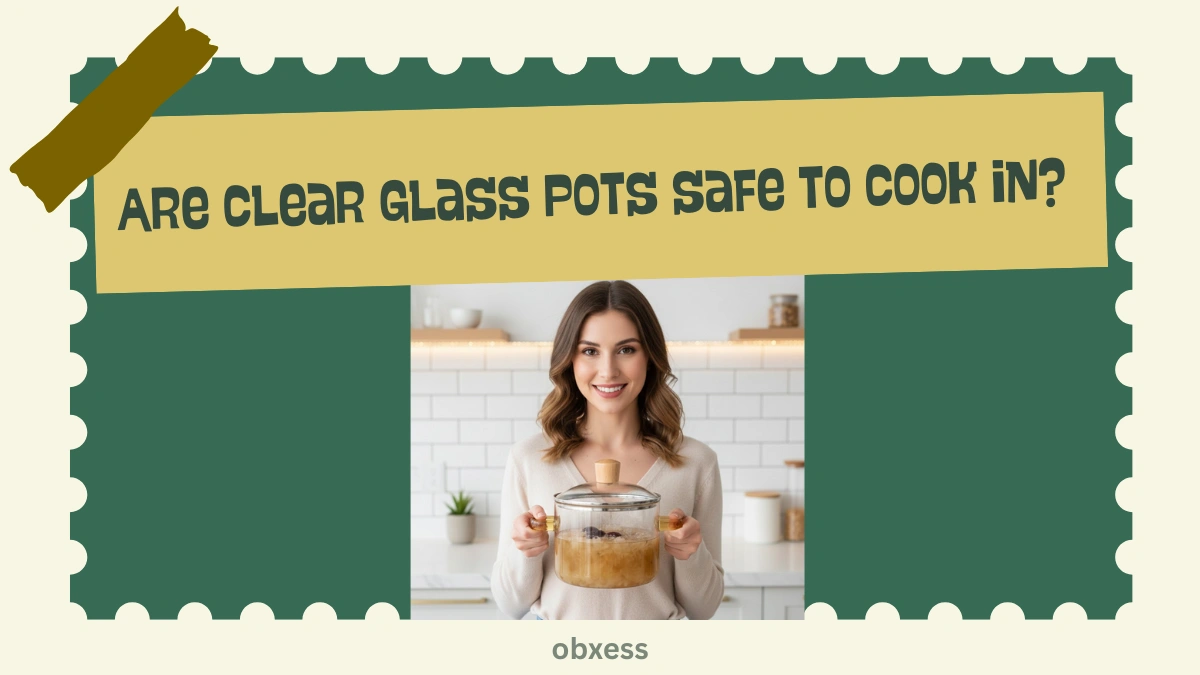
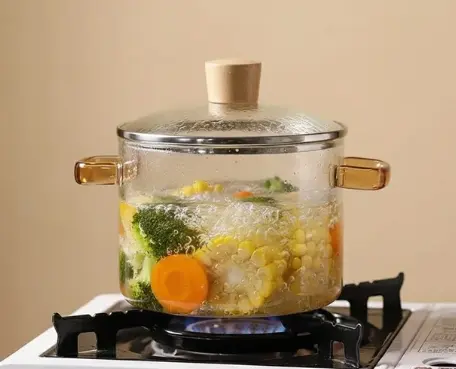
Scroll through cooking and food TikTok and you’ll see clear glass pots bubbling on the stove. Pasta boiling in crystal-clear water. Soup simmering while every ingredient stays visible. CookingTok loves glass cookware because it looks aesthetic, clean, and you can actually see the food cook. Great for the visuals.
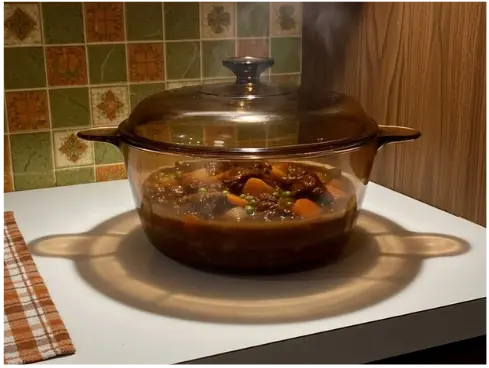
What feels like a brand-new trend is actually a throwback. Clear glass pots first became popular in the 1970s and 1980s, when brands like CorningWare and Pyrex marketed transparent cookware as modern, futuristic, and safer than metal. Then stainless steel took over, nonstick ruled the 2000s, and glass quietly disappeared from most kitchens.
Now it is back. And the big question is simple. Are clear glass pots safe to cook in?
Can Glass Pots Handle High Heat?
Yes, but with conditions.
Most clear glass cookware designed for stovetop or oven use is made from borosilicate glass or tempered glass. These materials are engineered to handle high temperatures without cracking under normal cooking conditions.
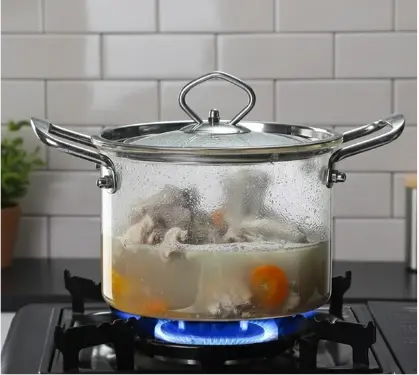
Borosilicate glass is especially heat-resistant and was originally developed for lab equipment. It expands less when heated, which makes it more stable on the stove and in the oven.
That said, glass is not metal. It does not tolerate sudden temperature changes well. That is where people get into trouble.

Glass pots can withstand heat when:
- They are placed on a burner gradually, not blasted on high immediately
- Heat is evenly distributed
- They are used on burners they are designed for
Used correctly, they are surprisingly durable.
Will a Glass Pot Burst if It Gets Too Hot?
This is the biggest fear, and the short answer is yes, but it is rare and usually caused by misuse.
Glass pots do not typically explode from heat alone. They crack or shatter due to thermal shock, which happens when one part of the glass heats or cools much faster than another.
Common causes of breakage include:
- Putting a cold glass pot directly onto a hot burner
- Adding cold water to a hot glass pot
- Moving a hot pot onto a cold countertop or wet surface
- Using a glass pot on high heat when it is designed for medium or low heat
When glass fails, it is dramatic, which is why the fear sticks. But under normal cooking conditions with gradual heating, glass pots are considered safe.
If you treat them gently, they usually return the favor.
What Temperatures Can Glass Pots Handle?
This depends on the brand and the type of glass, but general guidelines look like this:
- Most borosilicate glass cookware can handle oven temperatures up to 400 to 500 degrees Fahrenheit
- Stovetop glass pots are typically designed for low to medium heat, not high heat searing
- Tempered glass lids are often less heat-resistant than the pots themselves
Always check the manufacturer’s instructions. Some glass pots are oven-safe but not stovetop-safe. Others are stovetop-safe but only on gas or electric coils, not induction.
Glass cookware and induction stoves rarely mix unless the pot has a bonded metal base.
Are Clear Glass Pots Non-Toxic?
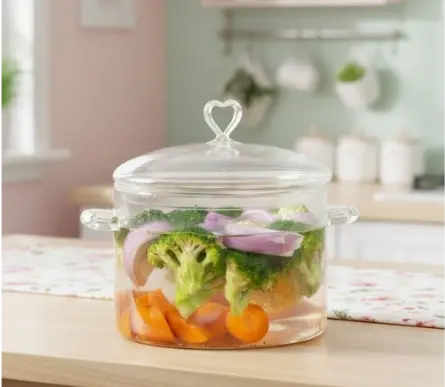
This is where glass really shines.
Glass is one of the most non-toxic cookware materials available. It does not leach chemicals into food, even at high temperatures. There are no coatings, no PFAS, no PFOA, and no heavy metals involved.
Unlike nonstick pans, glass does not degrade over time or release fumes when overheated. What you cook is what you eat.
For people concerned about long-term exposure to cookware chemicals, glass is often considered one of the safest options.
Are Glass Pots Easy to Clean?
Yes, and this is one of their biggest advantages.
Glass does not stain easily, does not absorb odors, and does not react with acidic foods. Tomato sauce, curry, soup, and garlic all wash away without lingering smells.
Most glass pots are:
- Dishwasher safe
- Resistant to scratching from normal utensils
- Easy to visually inspect for cleanliness
Burnt food can stick, especially since glass is not nonstick, but soaking usually solves the problem without harsh scrubbing.
And because they are transparent, you can see every last bit of residue before putting them away.
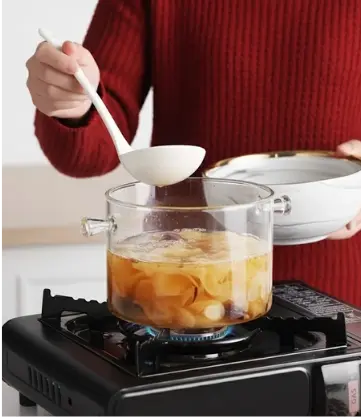
Pros of Cooking With Clear Glass Pots
There is a reason they are trending again.
Clear glass pots offer:
- Full visibility while cooking, which helps prevent overboiling and burning
- A non-toxic cooking surface
- Neutral flavor that does not interact with food
- Easy cleaning and stain resistance
- Aesthetic appeal for open kitchens and content creation
They are especially popular for soups, pasta, sauces, rice, and gentle simmering.
Cons of Glass Cookware
Glass cookware is not perfect, and pretending it is would be dishonest.
The downsides include:
- Less forgiving than metal when mishandled
- Poor heat retention compared to cast iron
- Not ideal for high-heat cooking or frying
- Heavier than it looks
- Limited compatibility with induction stoves
They are not a one-pan solution. Think of them as a light cooking tool rather than a workhorse.
Best Glass Cooking Pots (Top Picks & Budget Buys)
Cangfort 1.5 L Heat-Resistant Borosilicate Glass Cooking Pot
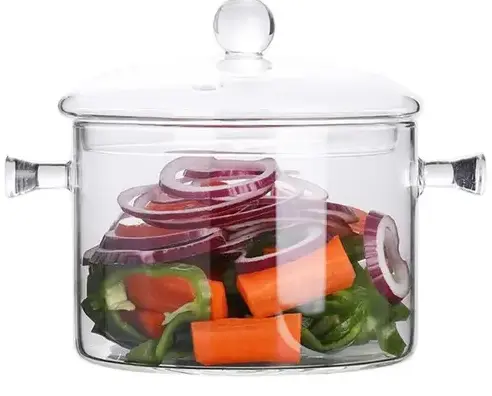
Great entry-level clear pot with a balanced medium size, roomy enough for soups, stews, and grains, yet compact for everyday use. The borosilicate glass body handles stovetop simmering and offers a full view of what’s bubbling inside.

Visions 1L Saucepan
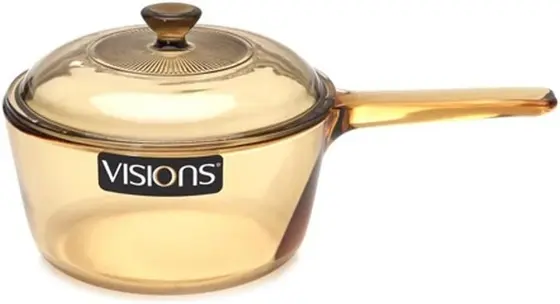
A retro-chic, amber-tinted glass-ceramic saucepan made from Visions’ pioneering transparent, thermal-shock-resistant glass-ceramic material. It’s non-porous and won’t absorb odors or flavors, making it ideal for soups, stews and sauces that benefit from clear visibility and even heat retention.
Le’raze 1.6 L Glass Cooking Pot
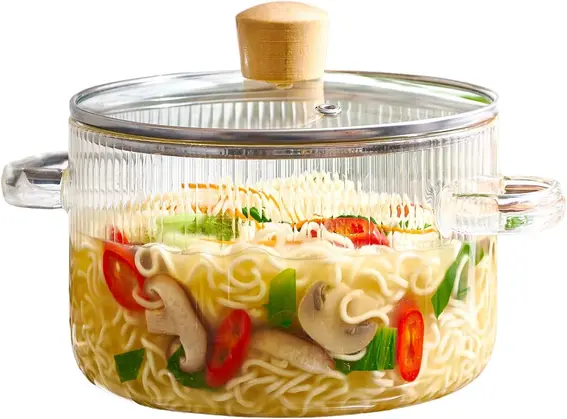
This pot catches the eye because of small design accents like its ribbed glass and crafted lid handle. The mid-size is versatile for everyday stovetop tasks, and the lighter weight makes it easier to handle than some bigger pots.
Miecux 1.5 L Heat-Resistant Borosilicate Glass Pot
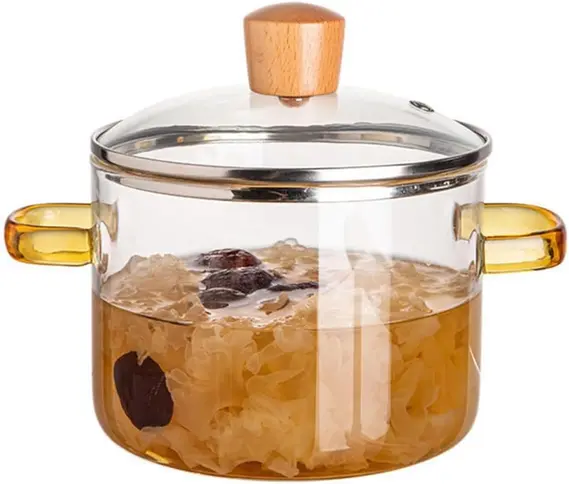
This medium-sized glass pot is built from food-grade borosilicate glass that’s lead-free and non-toxic, giving you a healthy cooking surface that won’t react with acidic foods or leach chemicals. It includes amber handles and a wooden top, making it easy to maneuver at all temperatures.
1.5L Pink Glass Heart Cooking Pot
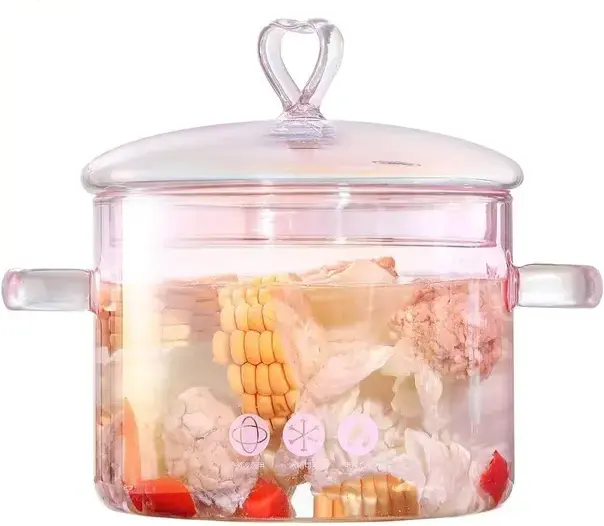
The glass pink pot not only offers aesthetic appeal, but is super cute and adds a pop of color to your kitchen. This glass pot is made of high borosilicate glass, which is non-toxic, BPA-free, lead-free, making it safe for cooking a variety of foods.
Crystalbru 2L Clear Glass Simmer Pot With Lid & Strainer
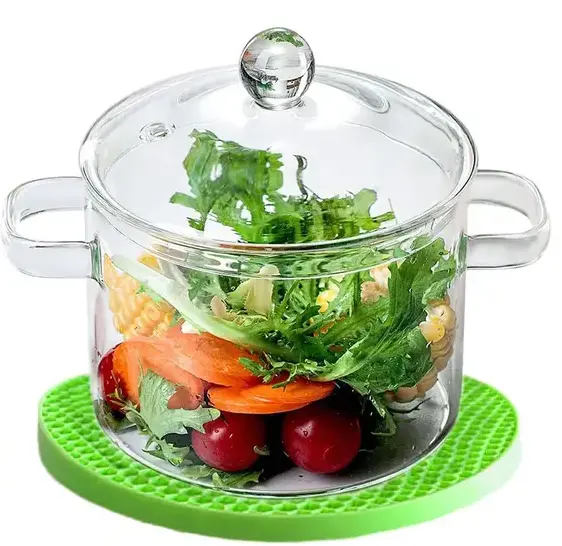
This large 2-liter clear pot goes beyond a basic glass saucepan by including anti-scald handles and often a built-in strainer lid, practical touches that show it’s designed for real cooking, not just looks.
Riavzau 1.7 L Borosilicate Glass Cooking Pot
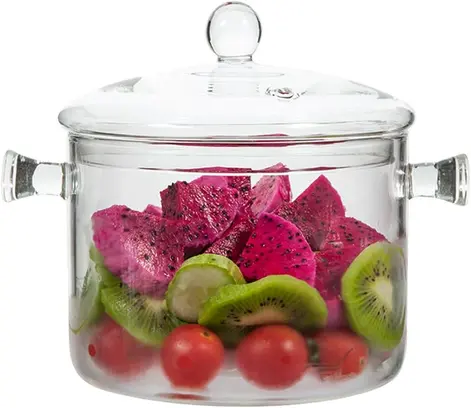
Another mid-range clear cooking pot with high ratings. It’s designed for versatile stovetop use and daily cooking, with a clear lid and ergonomic handles for comfortable lifting.
3.5L VISIONS Goulde Soup Pot
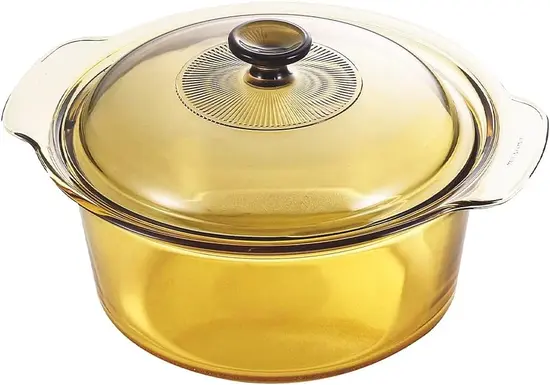
This classic Corning Visions 3.5 L amber-tinted glass pot is made from a high grade thermal-shock glass ceramic, designed to handle stovetop heat as well as oven, microwave, fridge, and freezer use. Its large, roomy capacity and double side handles make it a reliable choice for soups, stocks, braises, and one-pot meals that benefit from slow, even cooking.
How to Choose the Right Glass Pot for You
Here’s how to decide among these:
Capacity:
- Small to medium (1–2 L): Everyday cooking, sides, sauces.
- Larger (3 L+): Big batches, soups, family meals.
Handles vs. No Handles:
- Handles help with lifting and pouring. A straight clear pot without handles can feel sleek but trickier when full.
Accessories:
- Some pots include brushes or pads which make cleanup and safety easier.
Price vs. Performance:
- Budget glass pots are great for gentle cooking; if you want more durability across stovetop and oven uses, choosing a thicker borosilicate design (like the bigger stock pots) can pay off.
Pro Tip: Cleaning & Care
Glass cookware is naturally easy to clean and non-toxic — it won’t absorb odors or leach chemicals into your food. Still, avoid harsh temperature swings (like placing a hot pot on a cold surface), and use gentle scrubbers so you don’t scratch the surface.
Also Read: